

This guide breaks down the differences so teams can pick the right format for their next merch run.
What is the core difference between enamel pins and printed pins?
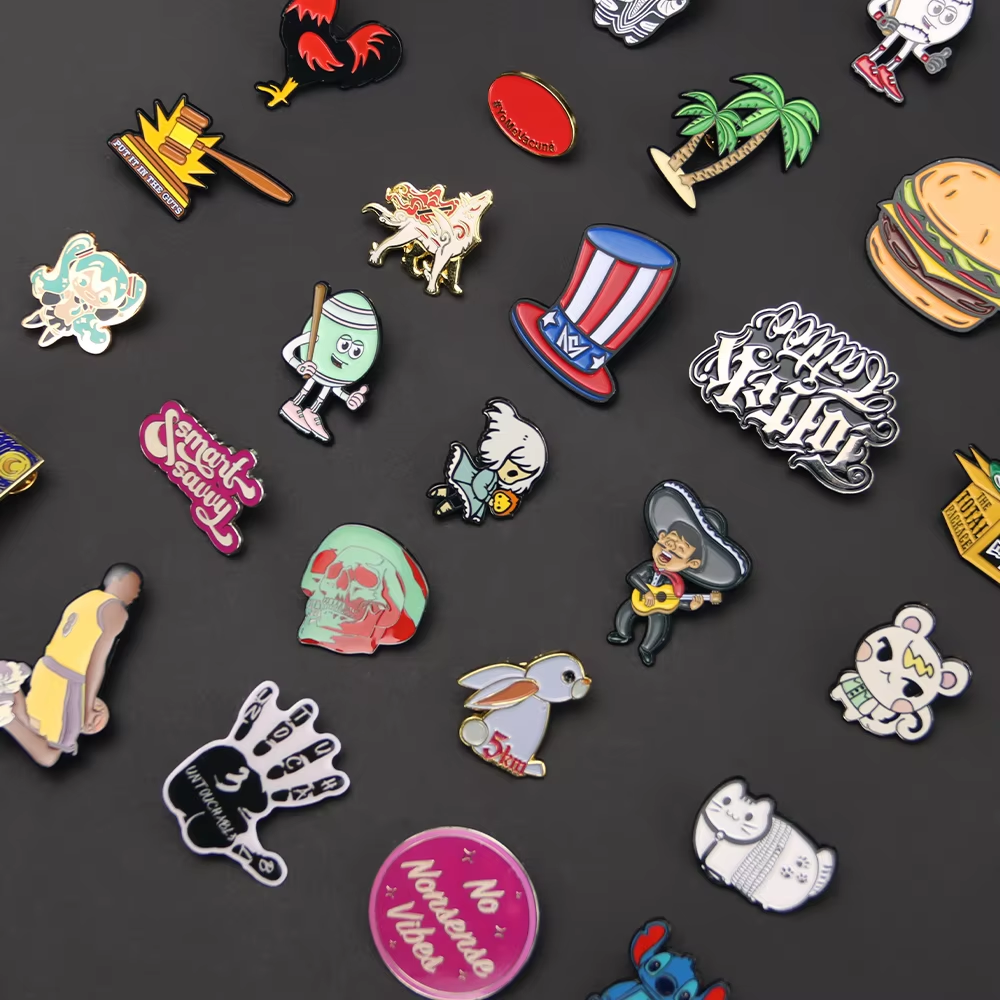
When comparing custom enamel pins, enamel pins are made from metal with recessed or raised areas, then filled with coloured enamel for a tactile, premium feel. Printed pins are typically a flat metal base with the design printed on top, often sealed with an epoxy dome for protection.
In short: enamel pins feel like a product, printed pins feel like a graphic on a product.
Which option looks more premium in real life?
Enamel pins usually look more premium because of their depth, shine, and “jewellery-like” finish. Even simple designs tend to look intentional and giftable.
Printed pins can look excellent too, but they rely heavily on print quality and finishing. Without a good top coat or epoxy, they can look flatter and more promotional.
Which one captures complex artwork and gradients better?
Printed pins win for complex illustrations, tiny details, photographic elements, and gradients. They can reproduce colour transitions and fine linework that enamel struggles with.
Enamel pins work best for bold shapes, clean line art, and limited colour palettes. If the design depends on subtle shading, printed is usually the safer choice.
How durable are enamel pins compared with printed pins?
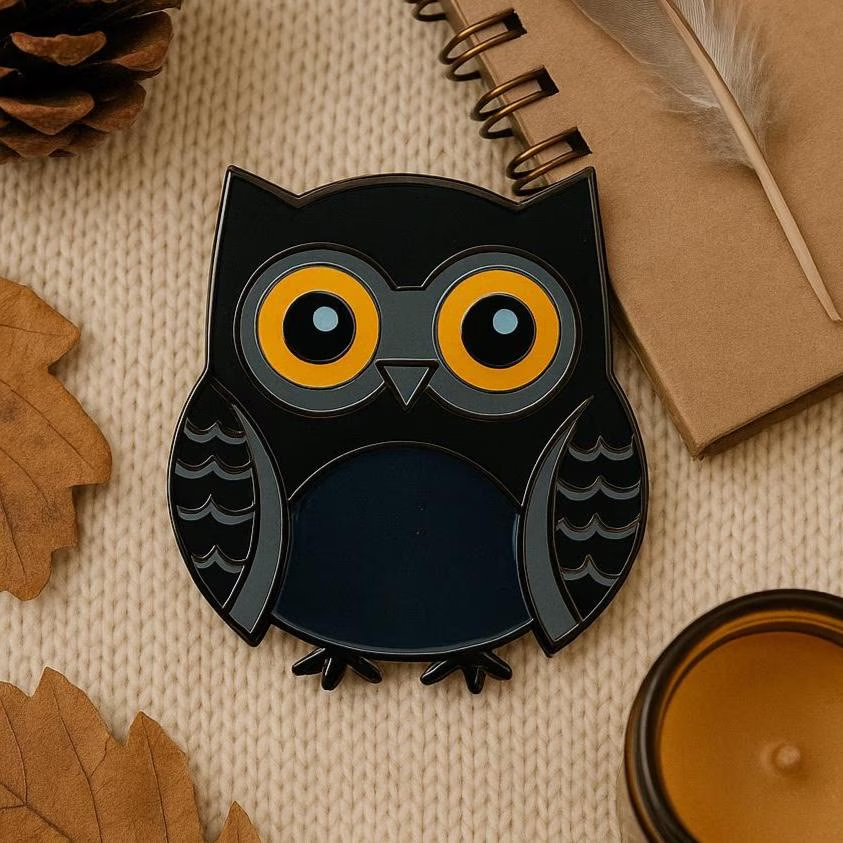
Enamel pins are generally more durable because the colour is set into the metal structure. Hard enamel, in particular, resists scuffs and feels smooth and solid.
Printed pins can scratch over time because the design sits on the surface. An epoxy dome improves durability, but it can still show wear, especially on high-contact areas like keychains or rucksacks.
Which type is better for brand consistency and colour matching?
Enamel pins can be very consistent once the brand agrees on specific enamel colours, but exact matching can be tricky across batches. Small shifts can happen due to manufacturing tolerances.
Printed pins can match brand colours more precisely when handled well, especially if the supplier offers proofing and calibration. The catch is that screens, printers, and coatings can still change how colours appear in real light.
What are the typical costs and minimum order quantities?
Printed pins are usually cheaper per unit, especially for designs with many colours or detailed artwork. They are often ideal for giveaways, events, and large-volume campaigns.
Enamel pins tend to cost more because they involve moulds and more production steps. Minimum order quantities vary, but enamel runs can feel less flexible for small tests unless the brand finds a supplier that supports low MOQs.
How fast can each type be produced?
Printed pins are usually faster because they skip some of the slower processes used in enamel production. They are a strong option for tight event deadlines.
Enamel pins can take longer due to mould creation, plating, enamel filling, and curing. If timelines are strict, the brand should confirm lead times before approving artwork.
Which pin type works best for giveaways, retail, and staff kits?
For giveaways, printed pins are often the best fit because they are cost-effective and visually flexible. They also work well for short-lived campaigns or seasonal designs.
For retail, enamel pins usually perform better because they feel more collectible and justify a higher price. For staff kits, enamel communicates “belonging” and permanence, while printed can be useful for quick internal initiatives.
What design styles suit enamel pins best?
Enamel pins shine with simple, iconic designs: logos, mascots, badges, and symbols. Thick outlines, clear shapes, and limited colours tend to produce the cleanest results.
They also suit a “stamp” look that feels official, which is why they work well for clubs, communities, and brand ambassador programmes.
What design styles suit printed pins best?
Printed pins are ideal for intricate illustrations, hand-drawn artwork, and designs with textures or gradients. They can also reproduce small text more reliably than enamel, depending on size.
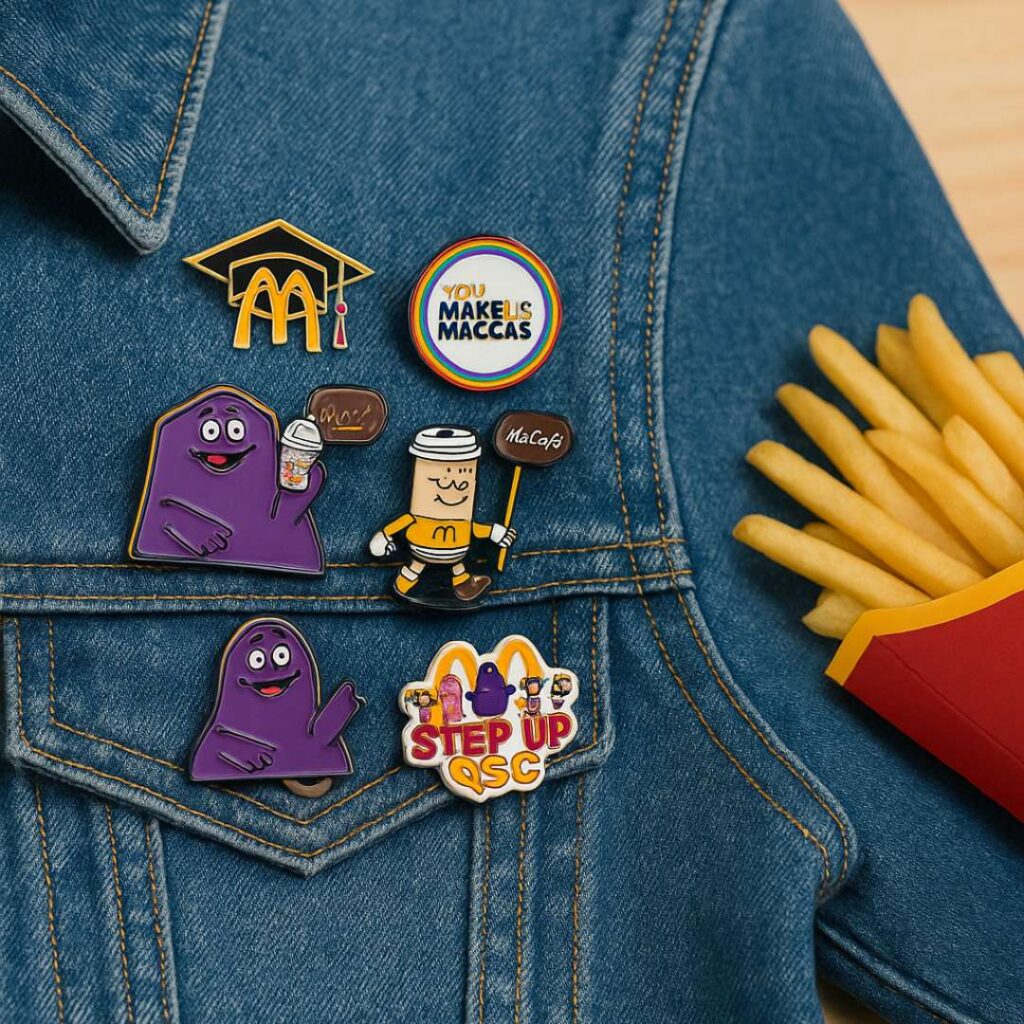
They are a strong choice when the design needs to look exactly like a poster, sticker, or social graphic. Learn more about how custom lapel pins Australia businesses use for marketing.
How should a brand choose based on audience and intent?
If the audience values collectability, craft, and “premium merch energy”, enamel is usually the better pick. It signals effort and tends to be kept for longer.
If the intent is reach, visibility, and volume, printed pins often make more sense. They can be produced quickly and cheaply enough to hand out widely without hesitation.
What is a practical decision checklist for choosing the right pin?
They can usually decide quickly by asking:
- Does the artwork need gradients, shading, or tiny detail? If yes, choose printed.
- Is the goal to sell at a premium or feel collectible? If yes, choose enamel.
- Is the budget tight and volume high? If yes, choose printed.
- Does the design rely on bold shapes and a classic badge look? If yes, choose enamel.
- Is the deadline soon? Printed is often faster.
So, what works best for brand merch overall?
Enamel pins usually work best when the brand wants long-term, premium merch that feels collectible and giftable. Printed pins usually work best when the brand wants fast, detailed designs at scale for campaigns and events.
If they are unsure, the simplest approach is to match the pin type to the design: bold and iconic for enamel, complex and illustrated for printed.
FAQs (Frequently Asked Questions)
What is the main difference between custom enamel pins and printed pins?
Custom enamel pins are crafted from metal with recessed or raised areas filled with coloured enamel, offering a tactile, premium feel. Printed pins feature a flat metal base with the design printed on top, often sealed with an epoxy dome for protection, resulting in a graphic-like appearance on the product.
Which type of pin looks more premium and collectible?
Enamel pins typically look more premium due to their depth, shine, and jewellery-like finish. They convey an intentional and giftable quality even with simple designs. Printed pins can look excellent but depend heavily on print quality and finishing; without a good top coat or epoxy, they may appear flatter and more promotional.
Which pin style is better for capturing complex artwork and gradients?
Printed pins excel at reproducing complex illustrations, tiny details, photographic elements, and gradients because they can display colour transitions and fine linework that enamel struggles to achieve. Enamel pins are best suited for bold shapes, clean line art, and limited colour palettes.
How do enamel pins compare to printed pins in terms of durability?
Enamel pins are generally more durable since the colour is set into the metal structure; hard enamel resists scuffs and feels smooth and solid. Printed pins can scratch over time as the design sits on the surface; although an epoxy dome improves durability, wear can still show especially on high-contact items like keychains or rucksacks.
What factors should brands consider when choosing between enamel and printed pins for their merch?
Brands should consider artwork complexity (gradients favour printed), desired premium or collectible feel (enamel preferred), budget constraints (printed is cheaper per unit), volume needs (printed suits large runs), production speed (printed is faster), and brand colour consistency. Matching design style to pin type helps: bold and iconic designs suit enamel; intricate illustrations suit printed.
Which pin type is best suited for giveaways, retail sales, and staff kits?
For giveaways, printed pins are ideal due to cost-effectiveness and visual flexibility. Retail settings favour enamel pins because they feel collectible and justify higher prices. Staff kits benefit from enamel’s sense of belonging and permanence, though printed pins can be useful for quick internal initiatives or short-term campaigns.